Summer in the Vale of Pewsey – isn’t it glorious and uplifting?
This blog began as a simple look at the plants you might spot on a summer walk, but it soon grew into something more. As it developed, the unique character of the Vale of Pewsey’s habitats – and the close connections between its flora and fauna – became impossible to ignore. These ecosystems are finely balanced, with delicate and important relationships, particularly between plants and insects, that make them both remarkable and vulnerable.
As a backdrop to this, the North Wessex Downs National Landscape – home to the Vale of Pewsey – holds around 9% of the UK’s remaining chalk grassland. This extremely rare habitat is extraordinarily rich, supporting over half of the country’s butterfly species and providing vital refuge for farmland birds. This unimproved chalk grassland is one of the most biodiverse ecosystems in the world, supporting up to 45 different plant species, such as orchids and wild thyme, as well as numerous invertebrates in a single square metre – it is a very rare ecosystem.
While often described as “unimproved” chalk grassland, these downs are not untouched wilderness. What we see today is the result of thousands of years of change – woodland gradually cleared and centuries of careful grazing by sheep and cattle shaping the open landscape. Without this ongoing stewardship, dense scrub would quickly take hold, and the delicate balance of life here would be lost.
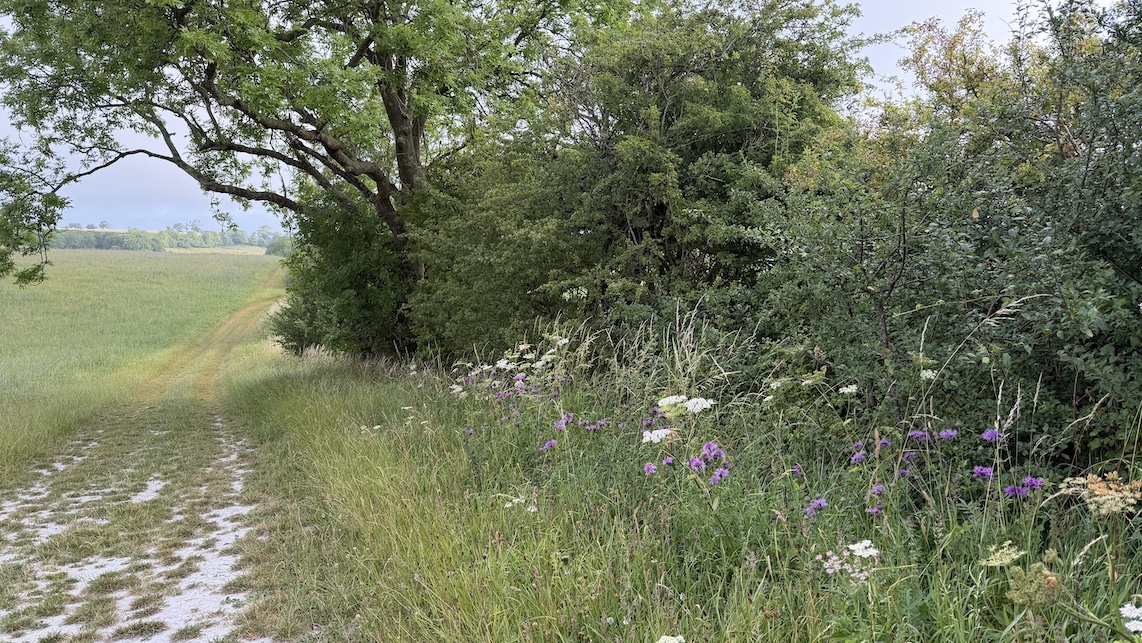
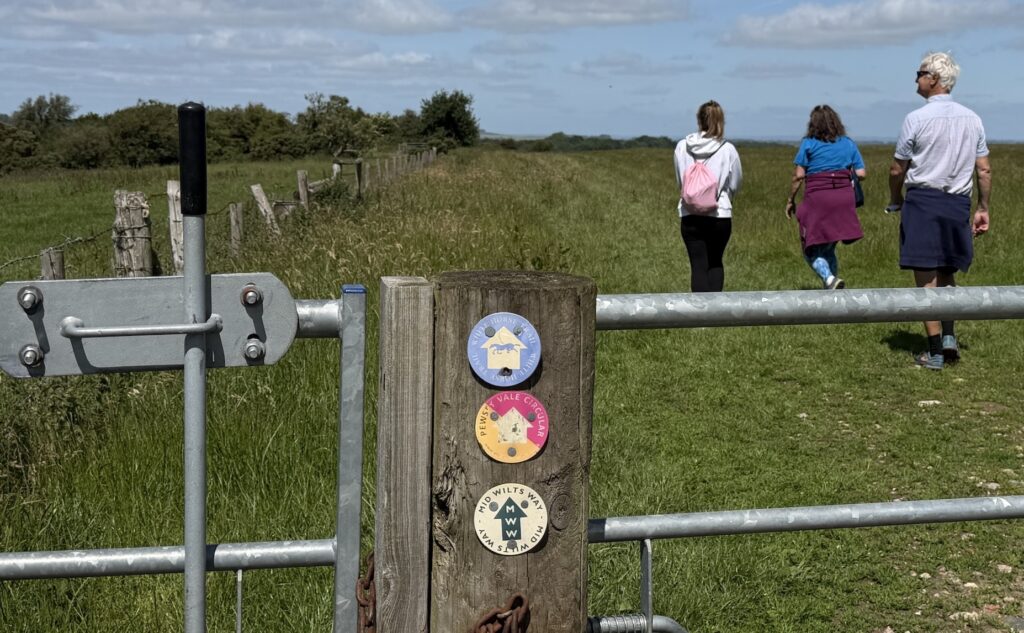
Walking in the Vale is a pleasure at any time of year. But rather than striding on, as we so often do, why not pause for a moment? Alongside those sweeping views, take a closer look at the ground beneath your feet – at the hedgerows, the grasses and the quiet life growing all around you. Along country lanes, field edges and winding footpaths, the richness of wild plants and wildlife is easy to overlook, yet truly remarkable once you begin to notice it. As you explore, tread lightly and take care – these small, intricate habitats depend on our respect now so they can continue to thrive for generations to come.
Here are some of our favourite species to look out for as you explore the Vale. Keep your eyes open – you never know what you might spot. If you’re keen to start identifying some of the butterflies mentioned here along the way (always a challenge!), the Butterflies of Britain & Ireland WildID Guide makes a brilliant companion to take with you.
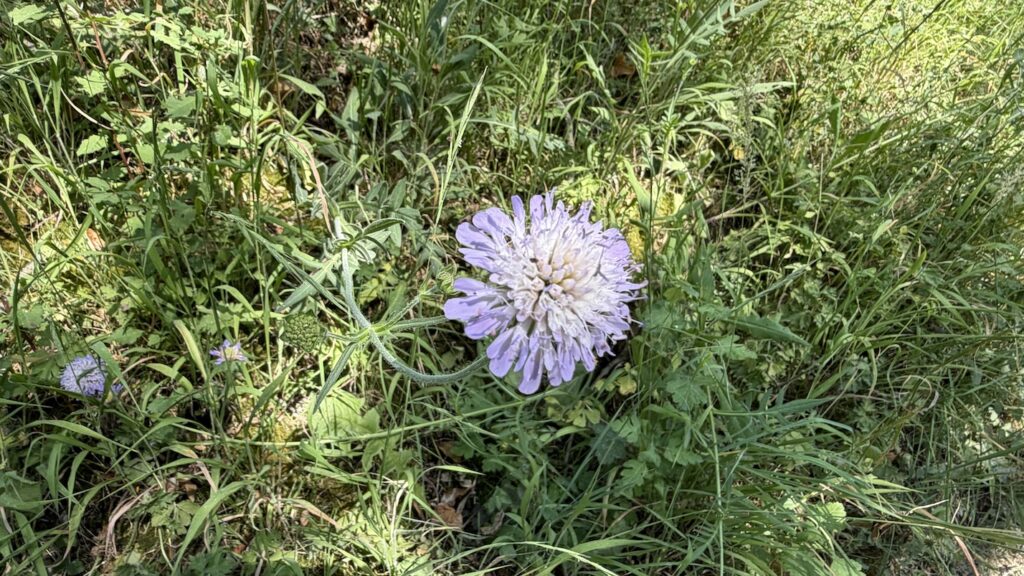
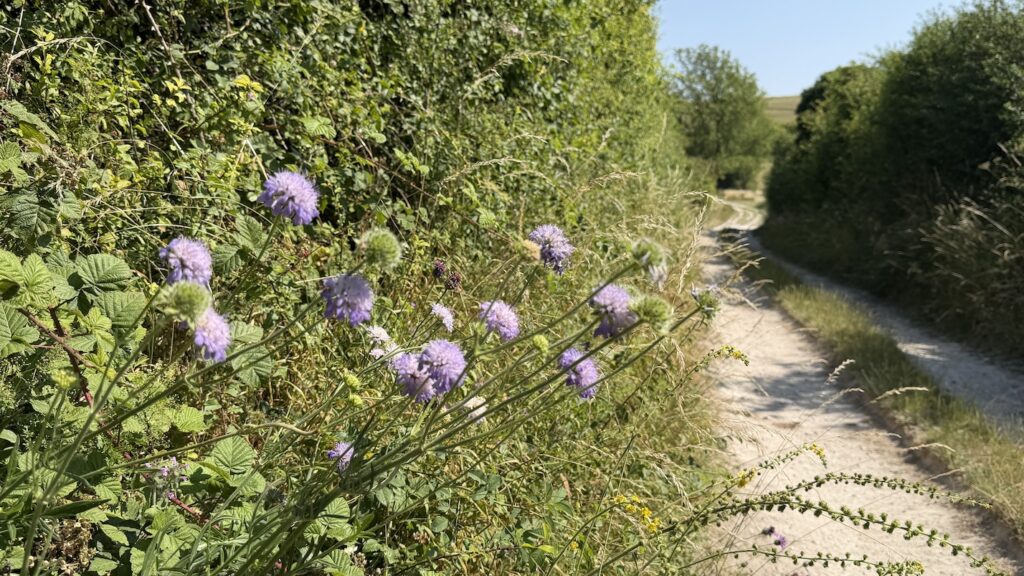
Field Scabious
These gorgeous lilac-blue pin cushions are ideal for bees and butterflies. You’ll find scabious plants in full sun, on track and lane edges and chalk soil is perfect for them. They detest sitting in soggy soil, so the chalk provides excellent drainage and the alkalinity of the chalk is their preference.
There are a number of species reliant on this plant, either for feeding or nesting, including the Marbled White and Meadow Brown butterflies, as well as the Scabious Mining Bee and the Narrow-Bordered Bee Hawkmoth (that’s a name to conjure with!).
A beautiful flower but not necessarily a beautiful reason for its name – it was used in traditional medicine to treat skin conditions, including scabies, both words derived from the Latin word scabere meaning ‘to scratch’.
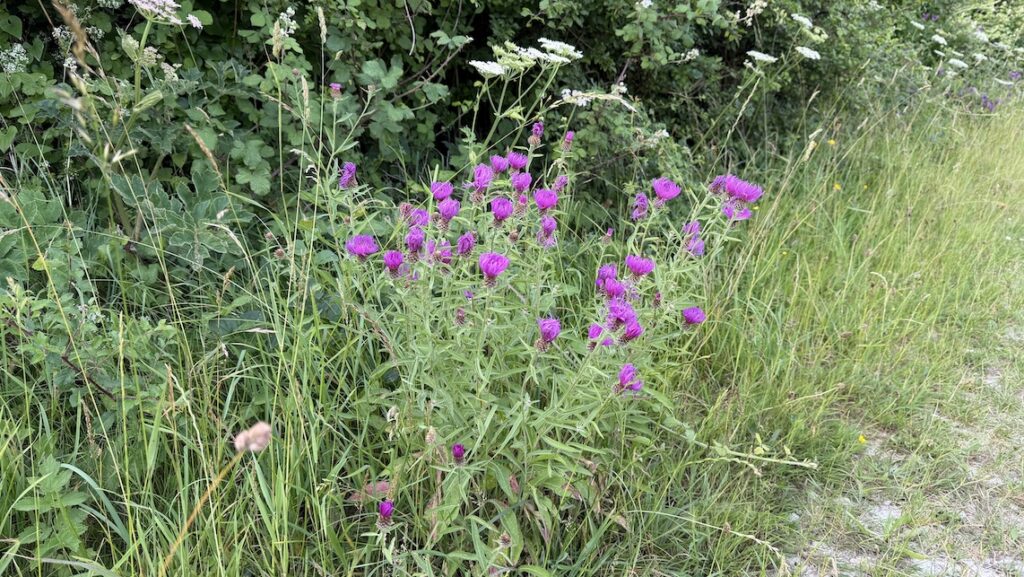
Knapweed
A prolific hedgerow and field edge plant, it is a magnet for insects, including the priority species Shrill Carder Bee and butterflies like the Marbled White, Chalkhill Blue and Meadow Brown. And once flowering is over, the pretty seed heads provide valuable winter food for seed-eating birds.
The importance of plants like knapweed cannot be overstated. Take the Shrill Carder Bee, so-called because the shrill buzz it makes is higher than other bumble bees. Once widespread, it has declined by an astonishing 98% and has disappeared completely from most of the UK due to habitat loss. There are only five places in the UK which have a population of these bees, including locations in Wiltshire, with the Vale of Pewsey an important transition route for them to and from Salisbury Plain.
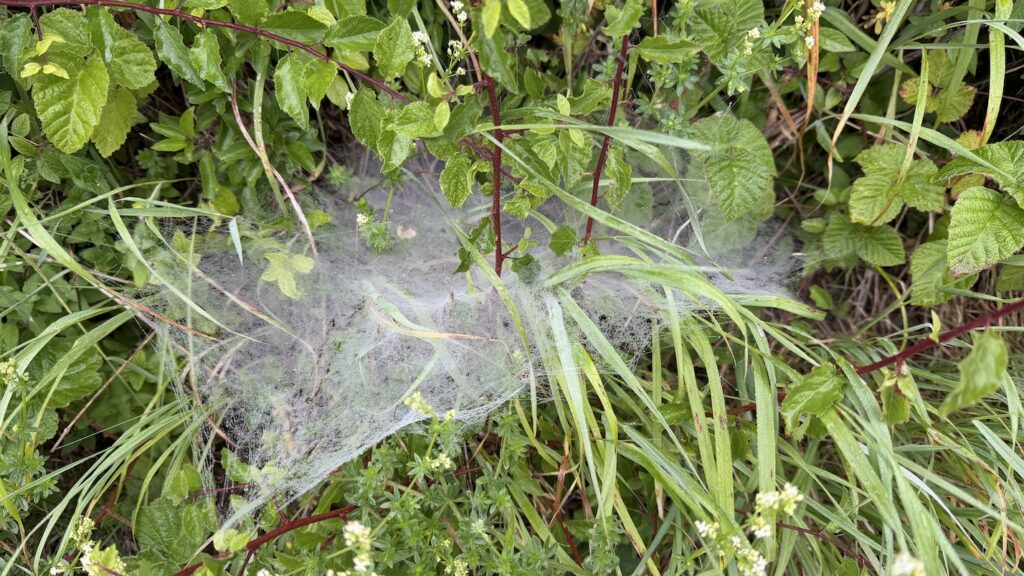
Nursery Web Spider
The nursery web spider (Pisaura mirabilis) is a common, active hunting spider found across the UK. You may not see the spider itself, but you will often see their funnel-style webs in the longer, undisturbed grass field edges. These webs are built to protect themselves and their young. The spider is completely harmless to humans and uses its impressive sprinting speed to catch flies.
Broomrape
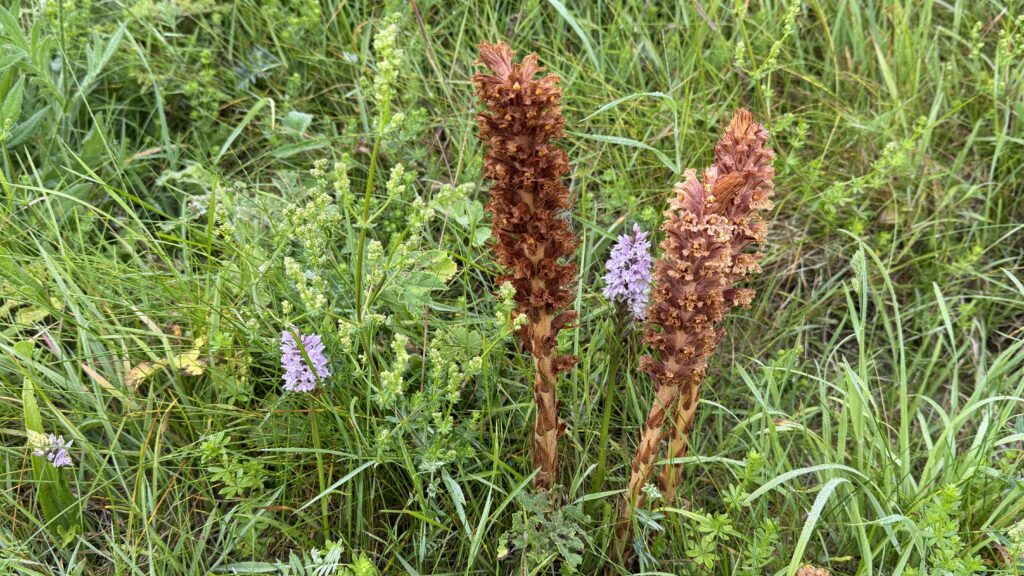
These are rather alarming to see in the field edges – they look like a completely dead orchid. However Broomrape is a parasitic herb and is this orangey-brown colour because it lacks chlorophyll (the chemical that makes plants green) and as a result cannot produce its energy from sunlight, a process called photosynthesis. Broomrape have no green parts or leaves but instead steal their water and nutrients underground by attaching directly to the roots of neighbouring host plants such as clover, wild carrot or greater knapweed. Another key dependency on the unassuming knapweed plant.
Rose bedeguar gall or Robin’s Pincushion
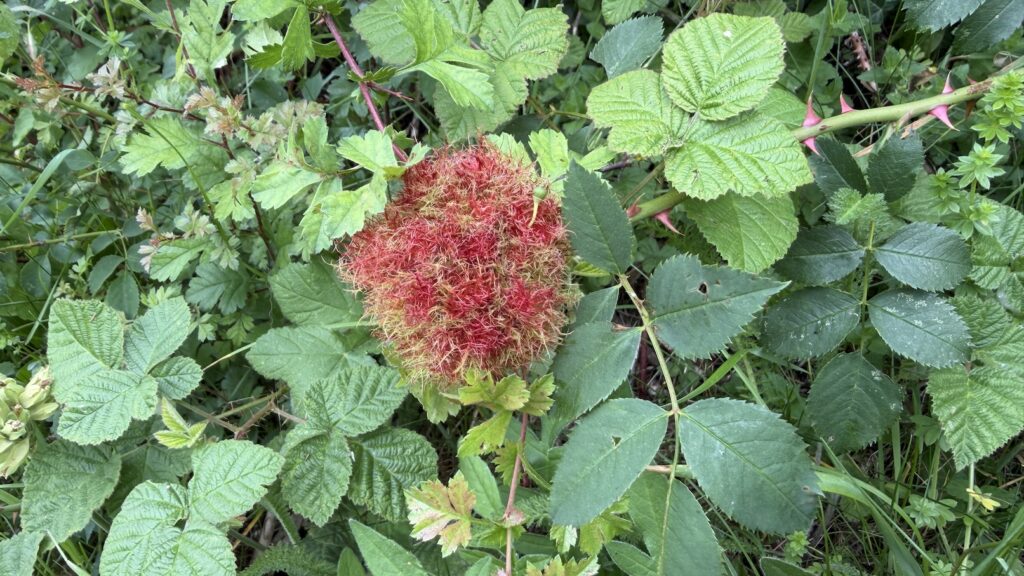
This gall is very striking and is always found on wild rose plants (normally dog roses) which you will regularly see in native hedgerows. The growth is created by a tiny gall wasp and the red, mossy rosette that we see is a distorted growth. A female gall wasp injects eggs and chemicals into a rose’s developing leaf or stem bud. This chemical message hijacks the plant’s growth system, forcing the rose to cease the production of normal shoots and instead grow the fuzzy red-and-green Robin’s pincushion.
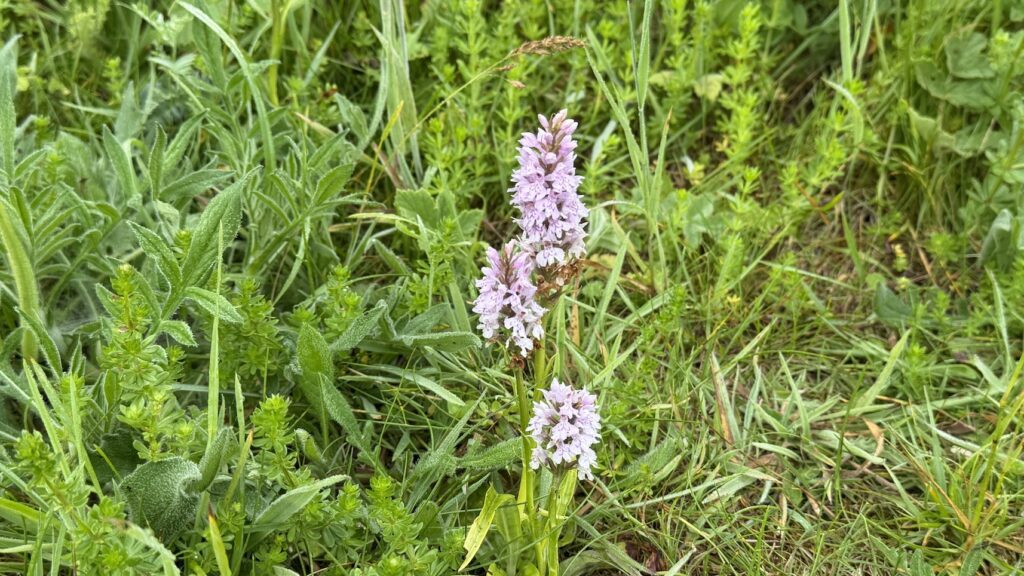
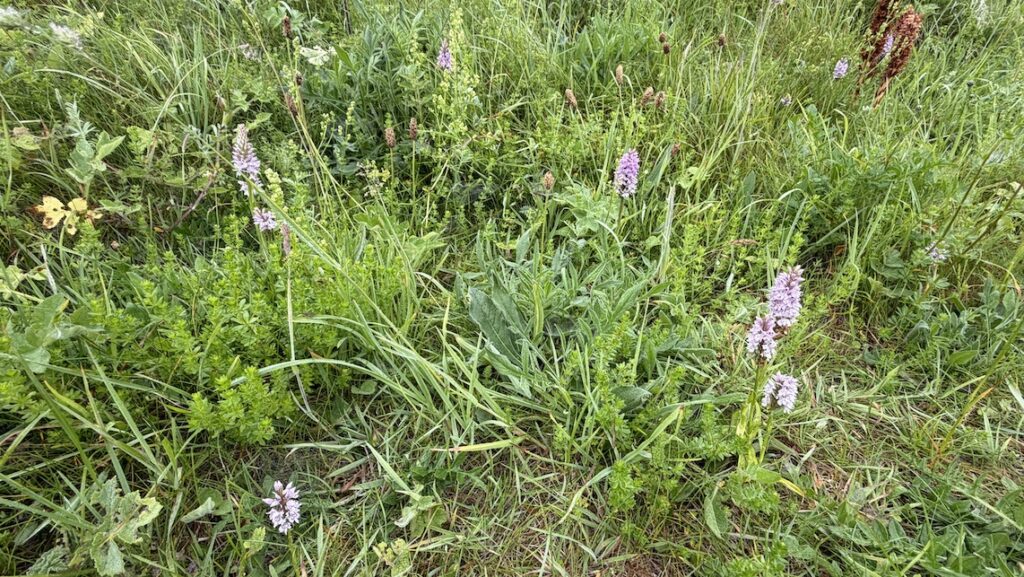
Common Spotted Orchid
These pretty orchids are a sign that you are probably on species-rich, chalk grassland. That means that the land is ecologically diverse, nutrient-poor and lime-rich, a habitat found on shallow soils over chalk bedrock. Why would a plant want to live on ‘nutrient-poor’ soil? The simple reason is that it dramatically reduces competition from aggressive, fast-growing grasses which quickly take over and block out light. In addition, orchids rely on essential fungi to grow and germinate. Unimproved chalk grasslands ensure that these diverse ecosystems remain undisturbed.
A perfect chalk downland plant to end with!